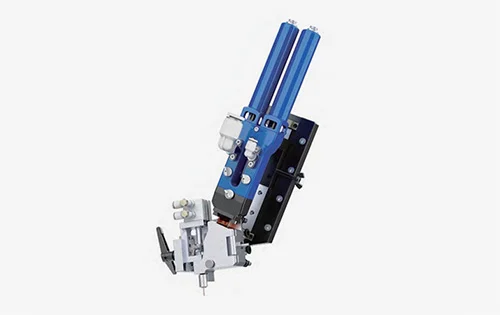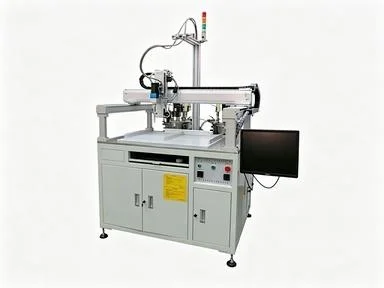

The overall performance of a two‑component dispensing valve depends on its internal components. Much like a smartphone’s performance is determined by its processor, the valve body serves as the core of the whole dispensing system. Various types of two‑component dispensing valves are available on the market. This article introduces key points for valve selection.
As high‑precision industrial dispensing equipment, two‑component dispensing valves are widely adopted in automated dispensing processes. The mixing valve consists of stroke adjustment parts, piston springs, pistons, seal springs, gaskets and nozzles. It controls glue delivery and flow rate for sealing applications with mixed two‑component adhesives and plays a vital role in equipment operation.
It delivers reliable glue control and effectively prevents glue leakage, dripping and needle clogging, compatible with diverse flow‑control equipment. It realizes micron‑level flow regulation for accurate and efficient dispensing. Note: The adhesive shall not work below 5℃. Heating is recommended, since low‑temperature environment may cause glue solidification and material cutoff. Dispensing volume shall be adjusted according to actual working conditions. Stop operation and troubleshoot when glue sticking issues occur.
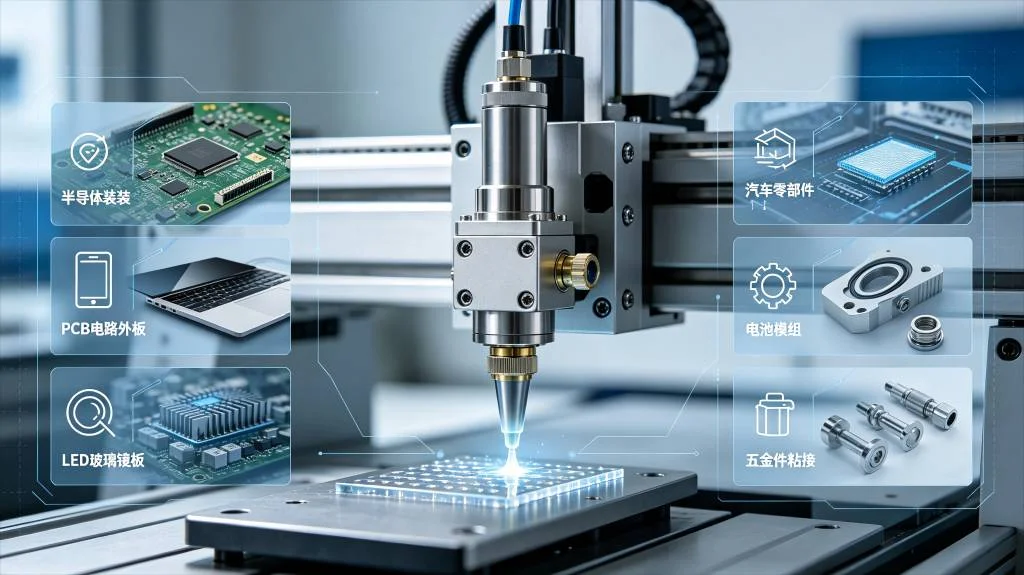
Application Industries of Two‑Component Dispensing Valves
Semiconductor packaging, PCB component fixing & protection, mobile phone & notebook housing bonding, LED glass substrate packaging, optical lens dispensing & encapsulation, automotive part coating, chip bonding, hardware coating & bonding, battery sealing, speaker dispensing, quantitative fluid filling and other fields.